
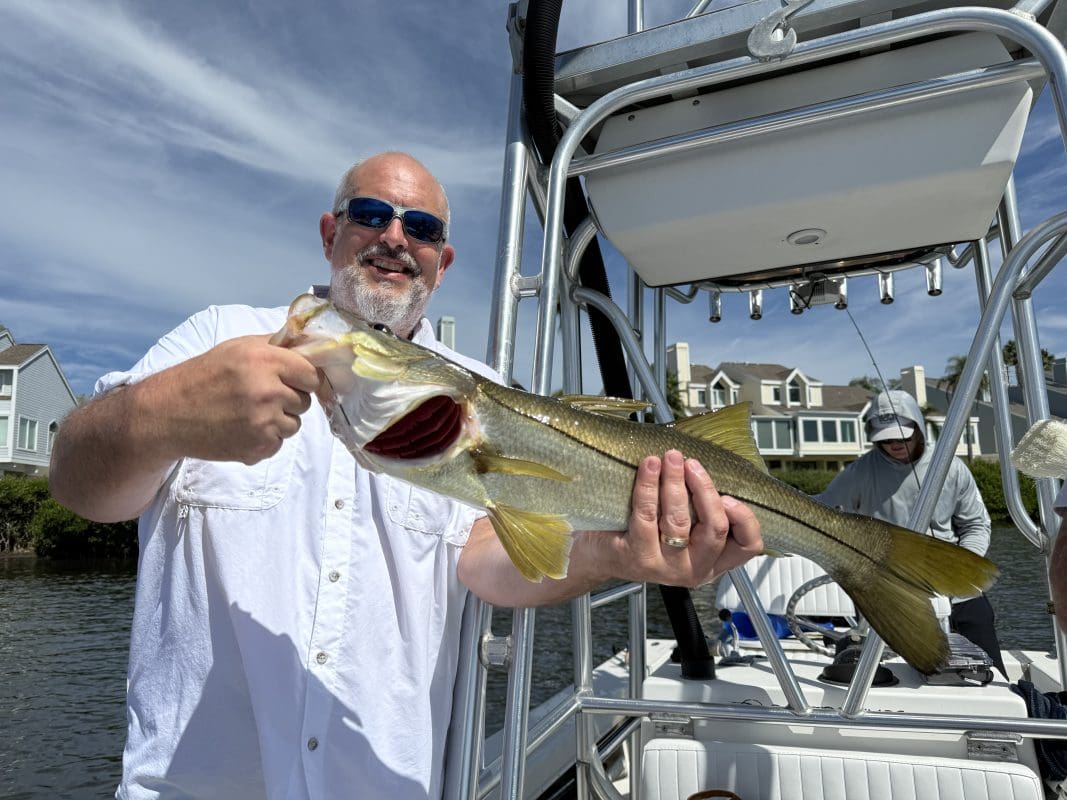
Time to reevaluate slot-sizes on snook, some say yes
By Capt. Danny Stasny
Snook Fishing and Slot-Size Limits Around Anna Maria Island
If you’re a flats angler around Anna Maria Island, you probably are accustomed to targeting snook.
And, if you’ve been fishing these waters for more than 20 years, you’ll probably notice the decline in the frequency of slot-size fish that inhabit our local waters.
All snook are born male but when they reach 18-22 inches long some become females. A slot-size snook in our region is 28-33 inches and it can take approximately 4-5 years for a fish to reach the 28- to 30-inch range. Female snook reach maturity at this age and size and continue to breed until the end of their lifespan, which can be up to 20 years. From then, on most these mature snook are almost exclusively female for the rest of their life, which brings up a question — are our slot-sizes for snook really helping the population or should we consider lowering the minimum and maximum size limit to not be harvesting potential breed stock size fish?
The smaller male snook measuring 18-26 inches are most abundant in the backcountry areas and are caught the most frequently but are always released as they are not legal to be harvested. The smaller fish are not as critical as a larger breeding fish, although they are always let go with the larger fish can be harvested, which almost seems counterproductive from a conservation standpoint.
Should Florida Snook Regulations Be Reconsidered?
Maybe it’s time to reassess the formula here and lower the slot to make the smaller snook harvestable and preserve the larger specimens. This may have an impact on populations much like it did with the recent changes to the spotted seatrout regulations which have resulted in noticeable and higher numbers in our region.
Shrinking the size and bag limit of spotted seatrout greatly increased their population in only the span of a few years.
Would the same method work for our snook?
In theory, yes, but until we try, it is hard to say.
Factors Affecting Snook Populations in West Central Florida
Aside from our normal regulations for harvesting snook there are other factors that impact our populations.
Red tide, habitat destruction, poor water quality and extended periods of cold weather are all detrimental to snook —and in the past 10 years, we have seen all these factors.
And of course, the most obvious is overfishing. We are seeing more and more anglers on the water in recent years than we have ever seen now that West Central Florida has become a hotspot for visitors and new residents, which brings up the topic once again, do we need stricter regulations or even a change or amendment to the current regulations?
Ultimately, a reevaluation is needed as it is obvious that we are not seeing the desired results of our conservation efforts.
Anna Maria Island Fishing Report: Mangrove Snapper
On my Just Reel charters, mangrove snapper are the most apparent species. Fishing ledges and rocky bottom areas leads to limits of these tasty fish for my clients on most days. Free-lining baits or bottom fishing them yields quick limits and plenty of action.
Other species like flounder, Spanish mackerel and ladyfish are being caught while targeting snapper which adds a little variety to the bite.
Sarasota Bay Fishing: Spotted Seatrout
Spotted seatrout are next in line with many being caught on the flats of Sarasota Bay. Grass flats in depths of 4-6 feet are holding trout of all sizes with many too big to keep.
Jack crevalle, ladyfish, mackerel and bluefish are on the prowl in these areas too, so you never know what’s going to eat your bait.
Backcountry Snook and Redfish on Shallow Flats
Fishing shallow flats along mangrove shorelines is proving to be good for both snook and redfish. Most snook catches are 20-26 inches. As for the reds all sizes are being caught up to 30 inches.
